
Calf health foundations: colostrum, air and bedding
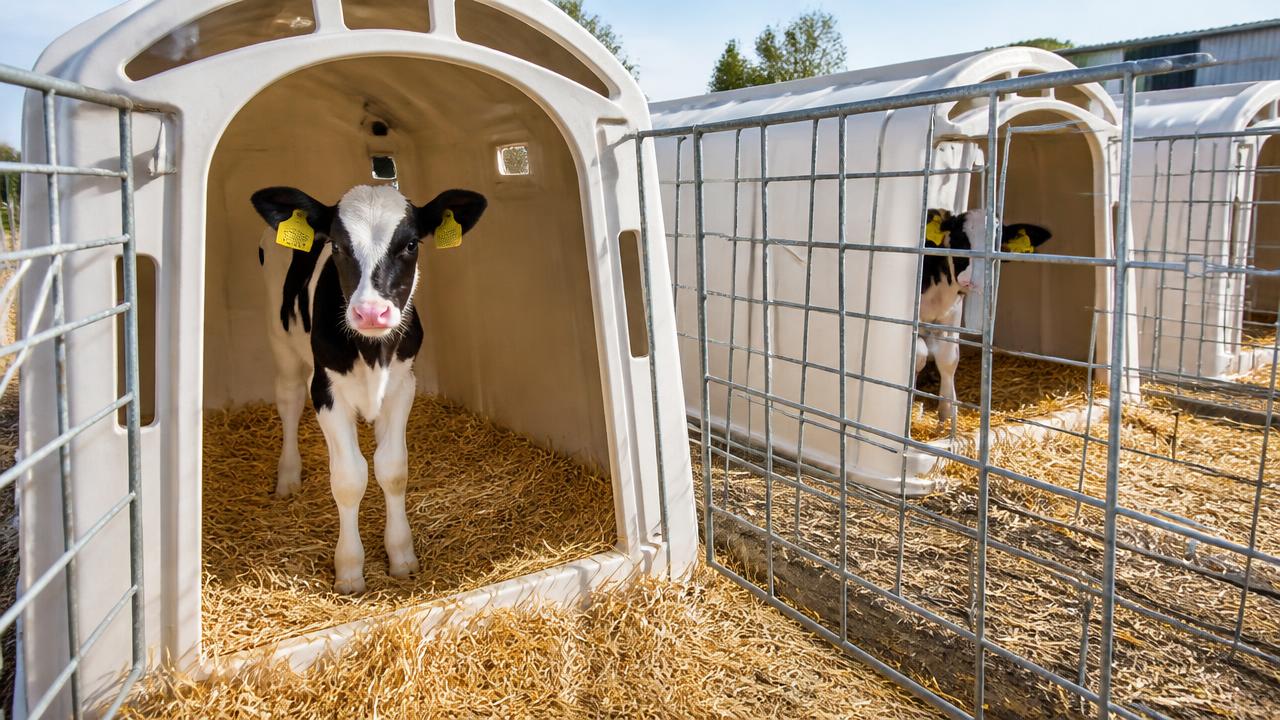
Preweaning morbidity is decided in the first twelve hours and in the cubic metres of air above the calf. A practical review of passive transfer targets, ventilation design and nesting scores for the youngstock unit.
Bouvera Dairy Digest covers preventative herd management only. Nothing here is veterinary advice: diagnosis, treatment and medicine decisions belong with your own herd veterinarian.
Calf health is the area of dairy management where prevention most obviously outperforms response. Urie et al. (2018), reporting national US data, linked preweaning morbidity and mortality to a small set of management factors that are entirely within farm control — colostrum, housing and hygiene.
Passive transfer: a process, not an event
Lombard et al. (2020) replaced the old pass/fail threshold with graded categories, reflecting the evidence that higher serum IgG continues to reduce risk well above the historical cut-off. In practice this means the target is no longer 'enough colostrum' but a documented process: quantity, quality, speed and cleanliness measured on every calf.
- Harvest within two hours of calving, from a clean udder into a clean vessel.
- Measure quality on every batch with a refractometer, not by appearance.
- Feed the first meal within the first hours of life, then a second feed as agreed in your farm protocol.
- Treat colostrum as a food product: cool it fast, label it, and audit the bacterial count of what calves actually receive.
Air is the second colostrum
Nordlund & Halbach (2019) set out calf-barn design principles that consistently separate low-pneumonia units from high-pneumonia units: fresh air delivered to the calf's microenvironment without draught, typically through correctly sized positive-pressure tube systems, plus solid pen divisions and adequate space. The four recurring faults are undersized fans, wrongly positioned or wrongly perforated tubes, blocked inlets and pens tucked into dead air at the ends of buildings.
Bedding you can measure
Nesting score — how far a lying calf's legs disappear into the bedding — is the fastest field assessment of thermal comfort in cold conditions. A score of three, where the legs are not visible, is the cold-weather target, and it costs straw rather than capital. In warm conditions the priority reverses toward drainage, dryness and shade.
Hygiene between calves
Godden et al. (2019) emphasise that the equipment chain — buckets, bottles, teats, tube feeders, mixing vessels — is a continuous transmission route. A written wash protocol with hot water, appropriate detergent and drying, applied to every item every day, does more for scours prevention than any amount of pen redesign. Any sick calf goes to the herd veterinarian for diagnosis and treatment; the farm's job is to make sickness rare.
- Godden, S. M., Lombard, J. E., & Woolums, A. R. (2019). Colostrum management for dairy calves. Veterinary Clinics of North America: Food Animal Practice, 35(3), 535–556. https://doi.org/10.1016/j.cvfa.2019.07.005
- Lombard, J., Urie, N., Garry, F., Godden, S., Quigley, J., Earleywine, T., McGuirk, S., Moore, D., Branan, M., Chamorro, M., Smith, G., Shivley, C., Catherman, D., Haines, D., Heinrichs, A. J., James, R., Maas, J., & Sterner, K. (2020). Consensus recommendations on calf- and herd-level passive immunity in dairy calves in the United States. Journal of Dairy Science, 103(8), 7611–7624. https://doi.org/10.3168/jds.2019-17955
- Nordlund, K. V., & Halbach, C. E. (2019). Calf barn design to optimize health and ease of management. Veterinary Clinics of North America: Food Animal Practice, 35(1), 29–45. https://doi.org/10.1016/j.cvfa.2018.10.002
- Urie, N. J., Lombard, J. E., Shivley, C. B., Kopral, C. A., Adams, A. E., Earleywine, T. J., Olson, J. D., & Garry, F. B. (2018). Preweaned heifer management on US dairy operations: Part V. Factors associated with morbidity and mortality in preweaned dairy heifer calves. Journal of Dairy Science, 101(10), 9229–9244. https://doi.org/10.3168/jds.2017-14019