
Sensors and early detection: turning rumination and activity data into prevention
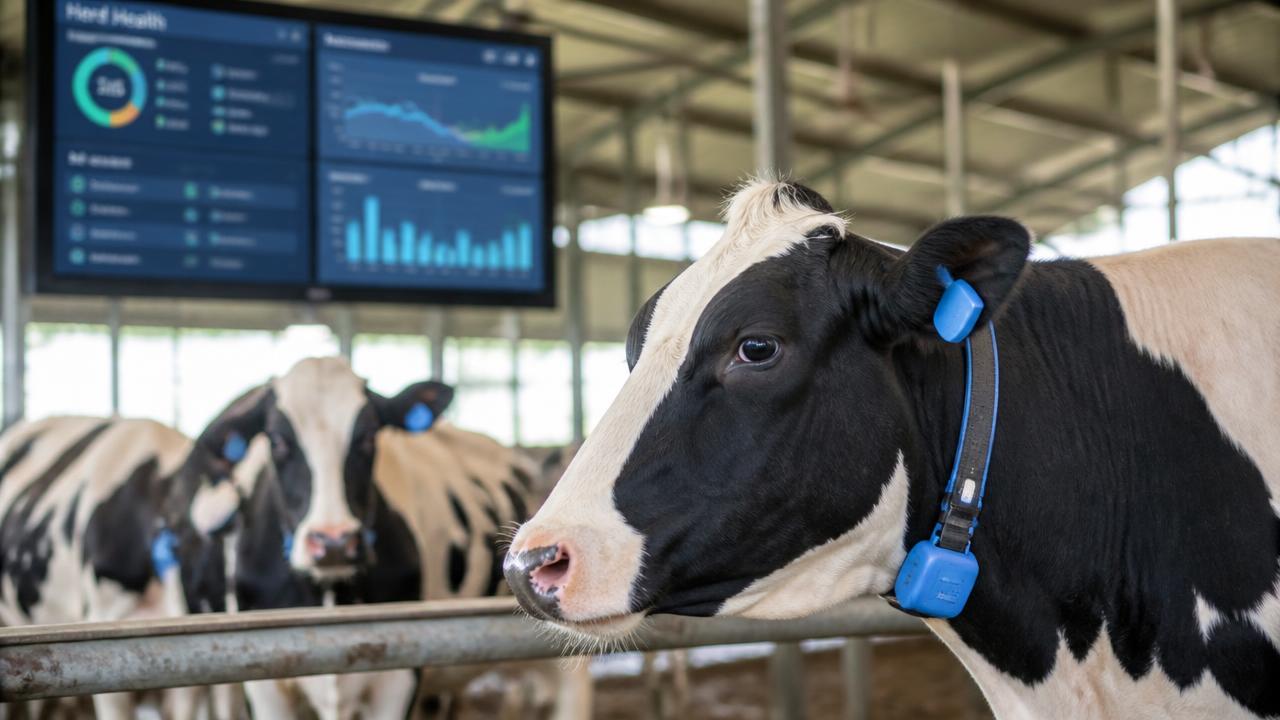
Sensor systems detect deviation days before people do — but only where the farm has decided in advance what an alert means. A review of the validation evidence and a framework for building an alert protocol that does not get ignored.
Bouvera Dairy Digest covers preventative herd management only. Nothing here is veterinary advice: diagnosis, treatment and medicine decisions belong with your own herd veterinarian.
Rutten et al. (2013) organised sensor research into four levels — technique, data interpretation, integration of information, and decision-making — and made the field's central point: most commercial systems perform well at the first two levels and poorly at the last two. The gap is not sensor accuracy. It is that farms rarely define, in advance, what they will do when an alert appears.
The signals are early and non-specific
Stangaferro et al. (2016) showed that rumination and activity monitoring identifies cows with metabolic and digestive disorders in advance of clinical detection, with useful sensitivity across a range of conditions. Non-specificity is a feature, not a flaw: the sensor tells you which cow to look at today, and the person still decides what they are looking at. Hogeveen et al. (2010) reached a similar conclusion for mastitis alerts — the perfect alert does not exist, so the protocol around the alert carries the value.
Write the protocol before the purchase
- Define who reviews alerts, at what time of day, and what constitutes a completed review.
- Define the physical check that follows an alert — the same observation list every time.
- Define the escalation trigger to the veterinarian, agreed with the veterinarian in advance.
- Record the outcome of every alert so that false-positive rates can be measured, not argued about.
Alarm fatigue is the failure mode
Installations fail predictably: thresholds are left at factory defaults, alert volume is high, the first weeks produce many unproductive checks, and within two months the list is no longer opened. Tuning thresholds to the herd, and deliberately accepting fewer alerts with higher precision, is almost always the right trade for a working farm.
Keep the sensor in its lane
Barkema et al. (2015) noted that as herds grow, individual-cow observation time falls and technology fills the gap. That is a legitimate use. What sensor data cannot do is diagnose. It flags deviation; the herd veterinarian diagnoses and decides on treatment. Farms that keep that boundary clear get the benefit of the technology without the risk that comes from acting on a dashboard alone.
- Rutten, C. J., Velthuis, A. G. J., Steeneveld, W., & Hogeveen, H. (2013). Invited review: Sensors to support health management on dairy farms. Journal of Dairy Science, 96(4), 1928–1952. https://doi.org/10.3168/jds.2012-6107
- Stangaferro, M. L., Wijma, R., Caixeta, L. S., Al-Abri, M. A., & Giordano, J. O. (2016). Use of rumination and activity monitoring for the identification of dairy cows with health disorders: Part I. Metabolic and digestive disorders. Journal of Dairy Science, 99(9), 7395–7410. https://doi.org/10.3168/jds.2016-10907
- Hogeveen, H., Kamphuis, C., Steeneveld, W., & Mollenhorst, H. (2010). Sensors and clinical mastitis — the quest for the perfect alert. Sensors, 10(9), 7991–8009. https://doi.org/10.3390/s100907991
- Barkema, H. W., von Keyserlingk, M. A. G., Kastelic, J. P., Lam, T. J. G. M., Luby, C., Roy, J.-P., LeBlanc, S. J., Keefe, G. P., & Kelton, D. F. (2015). Invited review: Changes in the dairy industry affecting dairy cattle health and welfare. Journal of Dairy Science, 98(11), 7426–7445. https://doi.org/10.3168/jds.2015-9377