
The transition period: managing intake, space and stability around calving
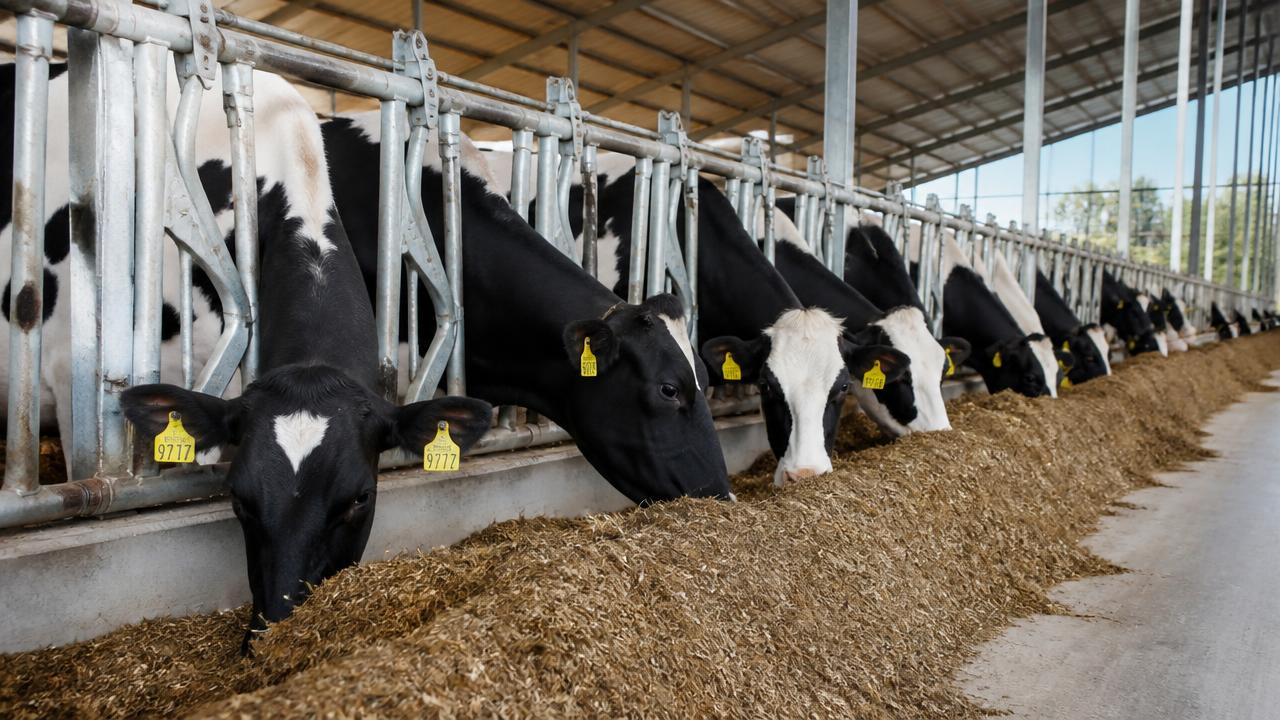
Three weeks either side of calving decide most of a cow's lactation. A review of the intake curve, pen-move stress and stocking density — and the monitoring routine that catches a struggling fresh cow before she becomes a case.
Bouvera Dairy Digest covers preventative herd management only. Nothing here is veterinary advice: diagnosis, treatment and medicine decisions belong with your own herd veterinarian.
Drackley (1999) called the transition period the final frontier of dairy nutrition, and the framing has held. The physiology is not in dispute: dry matter intake falls in the final week of gestation while nutrient demand rises steeply at calving, and the depth of that gap predicts the risk of essentially every early-lactation disorder. Grummer (1995) established the metabolic mechanism; the management question is what a farm can actually control.
Intake is the lever
Energy density can be formulated; intake has to be managed. The practical determinants are bunk access, feed push-up frequency, feed freshness, water availability and social stability. Herds that hold close-up stocking density at or below 80% of headlocks and provide 75–80 cm of bunk space per cow consistently record higher pre-partum intakes than herds with identical rations at higher density.
Pen moves are a stressor with a price
Regrouping resets the social hierarchy and reliably depresses intake for 24–72 hours. When that reset lands in the final week of gestation, it lands exactly where the intake curve is already falling. The operational rules that follow are simple: move cows in groups rather than singly, move at most once in the close-up period, and never move a cow within 48 hours of expected calving.
Behaviour precedes disease
Huzzey et al. (2007) demonstrated that reduced pre-partum feeding time and intake identify cows that later develop metritis — days before clinical signs. Proudfoot et al. (2009) showed the same pattern around dystocia. The practical implication is that a farm does not need a diagnostic laboratory to run good transition management; it needs a consistent daily observation of who is eating, who is ruminating and who is standing apart.
A fresh-cow routine that survives a busy morning
- Same person, same time, every day — consistency beats sophistication.
- Observe every fresh cow for the first 10 days in milk: attitude, rumen fill, manure, udder fill, appetite at the bunk.
- Write down what you see, not just what you conclude — the record is what lets your vet see a pattern.
- Escalate to your veterinarian on a defined trigger agreed in advance, rather than case by case.
McArt et al. (2012) put subclinical ketosis incidence in early lactation somewhere between 40% and 60% of cows in many freestall herds. That is not a treatment problem, it is a transition-management problem — and it is measured, prevented and reduced through intake, space and stability.
- Drackley, J. K. (1999). Biology of dairy cows during the transition period: The final frontier? Journal of Dairy Science, 82(11), 2259–2273. https://doi.org/10.3168/jds.S0022-0302(99)75474-3
- Grummer, R. R. (1995). Impact of changes in organic nutrient metabolism on feeding the transition dairy cow. Journal of Animal Science, 73(9), 2820–2833. https://doi.org/10.2527/1995.7392820x
- Huzzey, J. M., Veira, D. M., Weary, D. M., & von Keyserlingk, M. A. G. (2007). Prepartum behavior and dry matter intake identify dairy cows at risk for metritis. Journal of Dairy Science, 90(7), 3220–3233. https://doi.org/10.3168/jds.2006-807
- McArt, J. A. A., Nydam, D. V., & Oetzel, G. R. (2012). Epidemiology of subclinical ketosis in early lactation dairy cattle. Journal of Dairy Science, 95(9), 5056–5066. https://doi.org/10.3168/jds.2012-5443
- Proudfoot, K. L., Huzzey, J. M., & von Keyserlingk, M. A. G. (2009). The effect of dystocia on the dry matter intake and behavior of Holstein cows. Journal of Dairy Science, 92(10), 4937–4944. https://doi.org/10.3168/jds.2009-2135