
Udder health by design: building a herd that resists mastitis
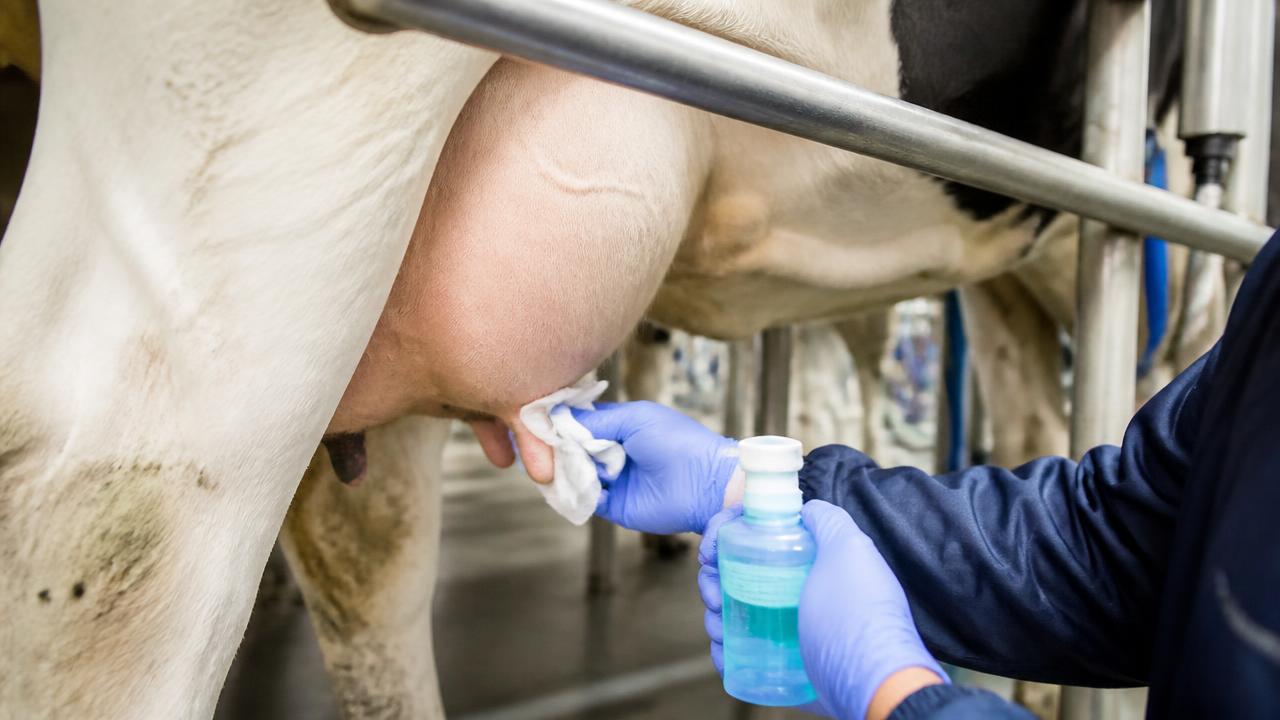
Mastitis prevention has not changed direction since the Five Point Plan of 1969 — it has simply become measurable. A practical review of milking routine, environment and dry-period management as the three levers that decide a herd's somatic cell count.
Bouvera Dairy Digest covers preventative herd management only. Nothing here is veterinary advice: diagnosis, treatment and medicine decisions belong with your own herd veterinarian.
Udder health is the clearest example in dairy of a problem that is solved by management systems rather than by intervention. The Neave et al. (1969) control programme — post-milking teat disinfection, dry-cow management, prompt attention to clinical cases, culling of chronic cows and regular machine maintenance — reduced contagious mastitis across the UK national herd within a decade, and every modern udder-health programme is a refinement of it.
Start with the milking routine, not the parlour
Across the herds Bouvera works with, the biggest single explanation of bulk-tank somatic cell count is not equipment but routine consistency: how teats are prepared, how long stimulation lasts before attachment, and whether the same sequence happens on every shift. Dufour et al. (2011) quantified this across large herd datasets — herds with documented, audited milking routines carry materially lower SCC than herds with equivalent facilities and no routine discipline.
- Fore-strip and pre-dip every cow, with 20–30 seconds of contact time before wiping.
- One clean cloth or towel per cow — this single change is repeatedly the cheapest SCC gain available.
- Attach 60–120 seconds after first tactile stimulation to align with oxytocin release.
- Post-dip full teat coverage on every quarter, every milking, checked by observation and not assumption.
The environment sets the ceiling
Once contagious transmission is controlled, environmental exposure decides how far a herd can go. Bedding dry-matter, stall cleaning frequency, alley scraping intervals and pre-milking cow cleanliness scores are the working variables. Ruegg's (2017) century review makes the point plainly: in modern herds the dominant pathogens are environmental, and environmental pathogens are managed through hygiene and housing, not through the milking cluster.
The dry period is a prevention window
Most new intramammary infections in a lactation are seeded around dry-off and around calving. Selective dry-cow approaches — deciding at the cow level, on records, which animals need which management at dry-off — have been shown by Rowe et al. (2020) to maintain udder health outcomes while reducing blanket antimicrobial use, provided that hygiene at dry-off and a clean, dry dry-cow environment are in place first. The selection framework and any product decision are made with the herd veterinarian; the farm's job is the data quality and the hygiene that make selection safe.
What to monitor
- Bulk-tank SCC trend on a rolling three-month basis, not month to month.
- Proportion of the herd above 200,000 cells/mL at each test day.
- New infection rate over the dry period, calculated from last-test and first-test pairs.
- Clinical case rate per 100 cow-months, recorded consistently by whoever finds the case.
A herd that measures these four figures every month, and reviews them with its veterinarian quarterly, will out-perform a herd with better facilities and no measurement. That is the practical conclusion of fifty years of udder-health science.
- Neave, F. K., Dodd, F. H., Kingwill, R. G., & Westgarth, D. R. (1969). Control of mastitis in the dairy herd by hygiene and management. Journal of Dairy Science, 52(5), 696–707. https://doi.org/10.3168/jds.S0022-0302(69)86632-4
- Dufour, S., Fréchette, A., Barkema, H. W., Mussell, A., & Scholl, D. T. (2011). Invited review: Effect of udder health management practices on herd somatic cell count. Journal of Dairy Science, 94(2), 563–579. https://doi.org/10.3168/jds.2010-3715
- Ruegg, P. L. (2017). A 100-Year Review: Mastitis detection, management, and prevention. Journal of Dairy Science, 100(12), 10381–10397. https://doi.org/10.3168/jds.2017-13023
- Rowe, S. M., Godden, S. M., Nydam, D. V., Gorden, P. J., Lago, A., Vasquez, A. K., Royster, E., Timmerman, J., & Thomas, M. J. (2020). Randomized controlled non-inferiority trial investigating the effect of 2 selective dry-cow therapy protocols on udder health and performance in the subsequent lactation. Journal of Dairy Science, 103(7), 6493–6503. https://doi.org/10.3168/jds.2019-17728