
Heifer rearing for reproductive success: growth targets that hold up
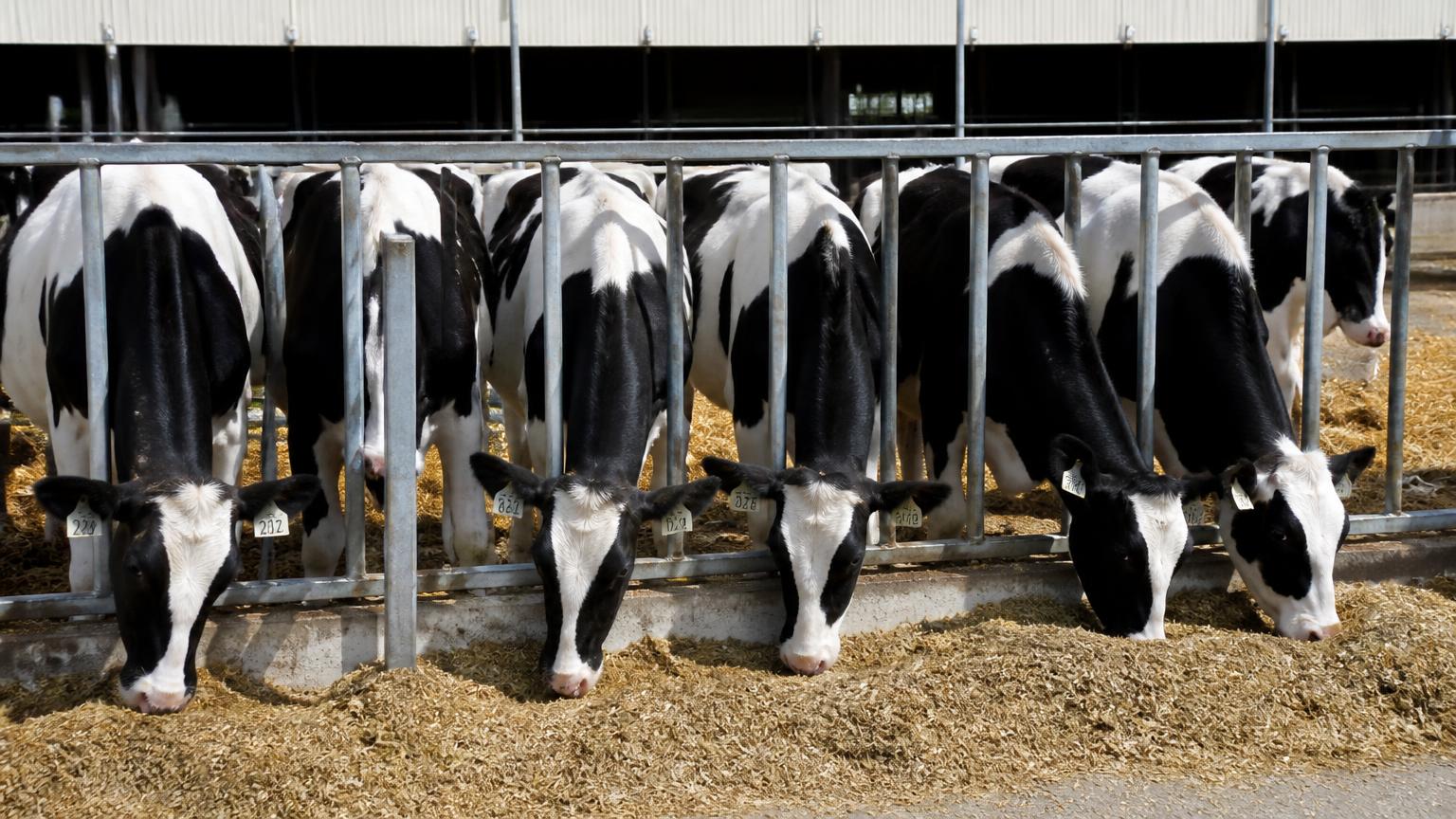
Age at first calving is the most-quoted heifer KPI and the most frequently misused. What the evidence says about growth rate, breeding by weight rather than age, and the long shadow of the first eight weeks of life.
Bouvera Dairy Digest covers reproductive management only. Nothing here is veterinary advice: diagnosis, hormonal protocols, medicines and treatment decisions belong with your own herd veterinarian.
Heifer rearing is the longest-payback investment on a dairy farm and the easiest to under-manage, because nothing goes visibly wrong for two years. The reproductive outcome is set by growth: a heifer is physiologically ready to breed at a body weight and frame size, not at an age, and herds that breed strictly by date carry both under-grown heifers served too early and over-conditioned ones served too late.
The weight targets
- Breed at roughly 55–60% of mature body weight; calve at roughly 85% of mature weight post-calving.
- For a mature Holstein of 650–700 kg, that means serving at approximately 380–400 kg with an appropriate wither height.
- Achieving that by 13–15 months requires an average daily gain of about 0.8 kg/day from weaning, which is a feeding and housing target long before it is a breeding target.
- Over-conditioned heifers at breeding conceive less well and have more difficult calvings — the aim is frame growth, not fat.
Age at first calving in context
The broad consensus supports calving between 22 and 25 months, with the economic optimum for most housed herds near the lower half of that range. But the number is only beneficial when it is achieved through growth. A herd that reduces age at first calving by serving light heifers earlier will see the cost reappear as poorer first-lactation yield, higher dystocia and higher first-lactation culling. Krpálková et al. (2014) and the wider literature are consistent on this: age at first calving is an outcome measure, not a lever.
The first eight weeks are reproductive management
Pre-weaning average daily gain has a durable relationship with first-lactation milk yield — the meta-analysis by Soberon and Van Amburgh (2013) put the effect at several hundred kilograms of first-lactation milk per additional kilogram of pre-weaning daily gain. Calves that grow well early reach breeding weight comfortably within the target window without compensatory feeding. Colostrum management and calf health in the first two months therefore sit squarely inside the reproductive programme, even though they appear two years upstream of it.
Measuring without a weighbridge
A heart-girth tape, used by the same person at the same points, is accurate enough for management decisions and infinitely better than estimation by eye. Weigh or tape at weaning, at six months and at breeding eligibility, record it, and use the breeding-eligibility measurement as the actual gate. That single change — a weight gate rather than an age gate — is one of the most reliable heifer-fertility improvements available.
- Soberon, F., & Van Amburgh, M. E. (2013). Lactation Biology Symposium: The effect of nutrient intake from milk or milk replacer of preweaned dairy calves on lactation milk yield as adults: A meta-analysis of current data. Journal of Animal Science, 91(2), 706–712. https://doi.org/10.2527/jas.2012-5834
- Krpálková, L., Cabrera, V. E., Kvapilík, J., Burdych, J., & Crump, P. (2014). Associations between age at first calving, rearing average daily weight gain, herd milk yield and dairy herd production, reproduction, and profitability. Journal of Dairy Science, 97(10), 6573–6582. https://doi.org/10.3168/jds.2013-7497
- Heinrichs, A. J., Zanton, G. I., Lascano, G. J., & Jones, C. M. (2017). A 100-Year Review: A century of dairy heifer research. Journal of Dairy Science, 100(12), 10173–10188. https://doi.org/10.3168/jds.2017-12998
- Curtis, G. C., Argo, C. M., Jones, D., & Grove-White, D. H. (2018). The impact of early life nutrition and housing on growth and reproduction in dairy cattle. PLOS ONE, 13(2), e0191687. https://doi.org/10.1371/journal.pone.0191687