
Calf bedding: the underrated determinant of pre-weaning welfare
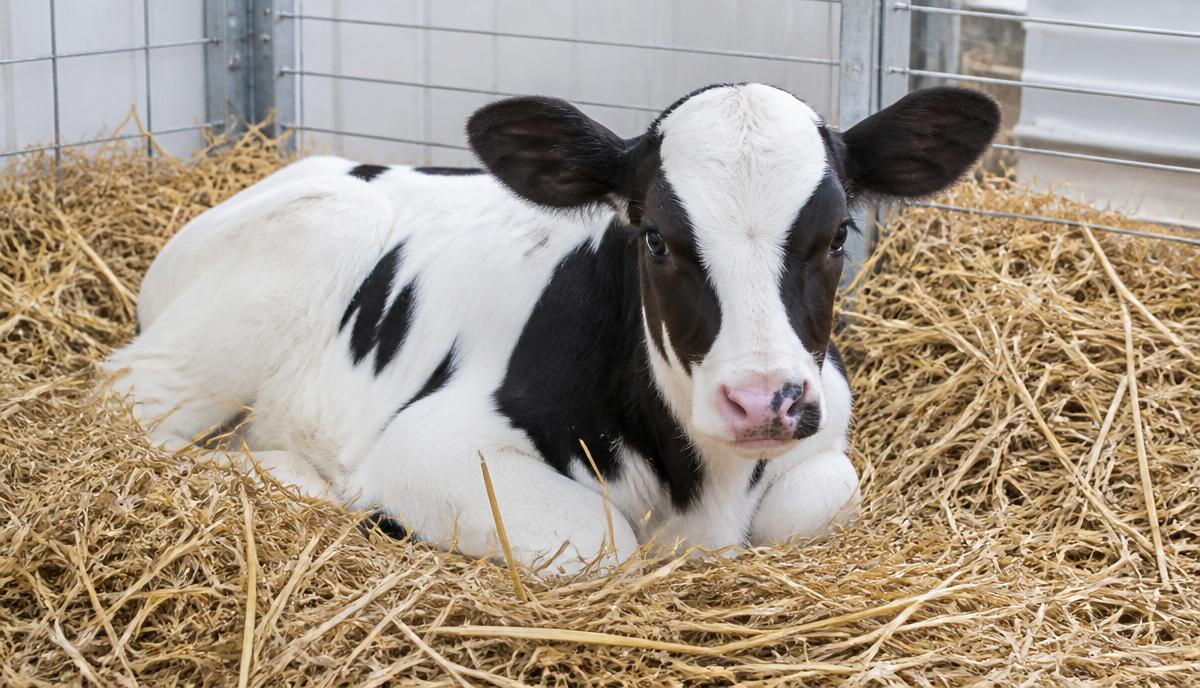
Nesting score, dryness and thermal insulation drive calf morbidity more than most other pen-level factors. What the evidence supports for bedding type, depth and management.
Calf bedding is one of the highest-leverage and most under-managed welfare variables on modern dairies. The evidence links bedding quality directly to respiratory disease incidence, growth rate and cold-stress physiology, and the interventions are cheap compared with almost any other welfare improvement.
Nesting score first
The Wisconsin nesting score — 1 (legs fully visible), 2 (legs partly visible), 3 (legs not visible when the calf lies down) — takes seconds to assess and predicts respiratory disease risk. Lago et al. (2006) established the association and subsequent work has repeatedly confirmed it: score-3 nesting through cold months meaningfully reduces bovine respiratory disease incidence.
Bedding type matters below the lower critical temperature
Below the calf's lower critical temperature (approximately 10 °C for calves under three weeks), deep straw provides substantially better thermal insulation than sand or shavings — calves nest into it and lose less heat to the floor. Above that threshold the differences narrow and dryness dominates. Panivivat et al. (2004) quantify the growth and health differences across bedding substrates in a controlled trial.
Dryness is the modifiable variable
- A simple kneel test — kneel for 20 seconds and check whether trousers are damp — is a reliable field indicator.
- Damp bedding elevates ammonia at calf-nose height, which is where respiratory epithelium is exposed.
- Water leaks from group-pen troughs are a leading cause of chronic wet bedding and should be audited monthly.
- Refresh frequency should be driven by moisture, not the calendar.
Deep-pack vs. frequent refresh
Both strategies can achieve nesting score 3 and acceptable moisture levels. Deep-pack systems require adequate initial depth (at least 20 cm of straw) and complete removal on a defined cycle; frequent-refresh systems require discipline in the daily routine. The wrong answer is a shallow pack refreshed inconsistently — this produces the wet, cold, ammoniated microclimate that drives calf pneumonia.
- Lago, A., McGuirk, S. M., Bennett, T. B., Cook, N. B., & Nordlund, K. V. (2006). Calf respiratory disease and pen microenvironments in naturally ventilated calf barns in winter. Journal of Dairy Science, 89(10), 4014–4025. https://doi.org/10.3168/jds.S0022-0302(06)72445-6
- Panivivat, R., Kegley, E. B., Pennington, J. A., Kellogg, D. W., & Krumpelman, S. L. (2004). Growth performance and health of dairy calves bedded with different types of materials. Journal of Dairy Science, 87(11), 3736–3745. https://doi.org/10.3168/jds.S0022-0302(04)73513-6
- Nordlund, K. V., Cook, N. B., & Oetzel, G. R. (2019). Commingling risk and calf housing design in group-housed pre-weaned dairy calves. Veterinary Clinics of North America: Food Animal Practice, 35(1), 173–186. https://doi.org/10.1016/j.cvfa.2018.11.005
- Hill, T. M., Bateman, H. G., Aldrich, J. M., & Schlotterbeck, R. L. (2011). Comparisons of housing, bedding, and cooling options for dairy calves. Journal of Dairy Science, 94(4), 2138–2146. https://doi.org/10.3168/jds.2010-3841
- Sutherland, M. A., Worth, G. M., Cameron, C., Ross, C. M., & Rapp, D. (2017). Health, physiology, and behavior of dairy calves reared on 4 different substrates. Journal of Dairy Science, 100(3), 2148–2156. https://doi.org/10.3168/jds.2016-11742