
Dairy welfare legislation: an international comparison in 2026
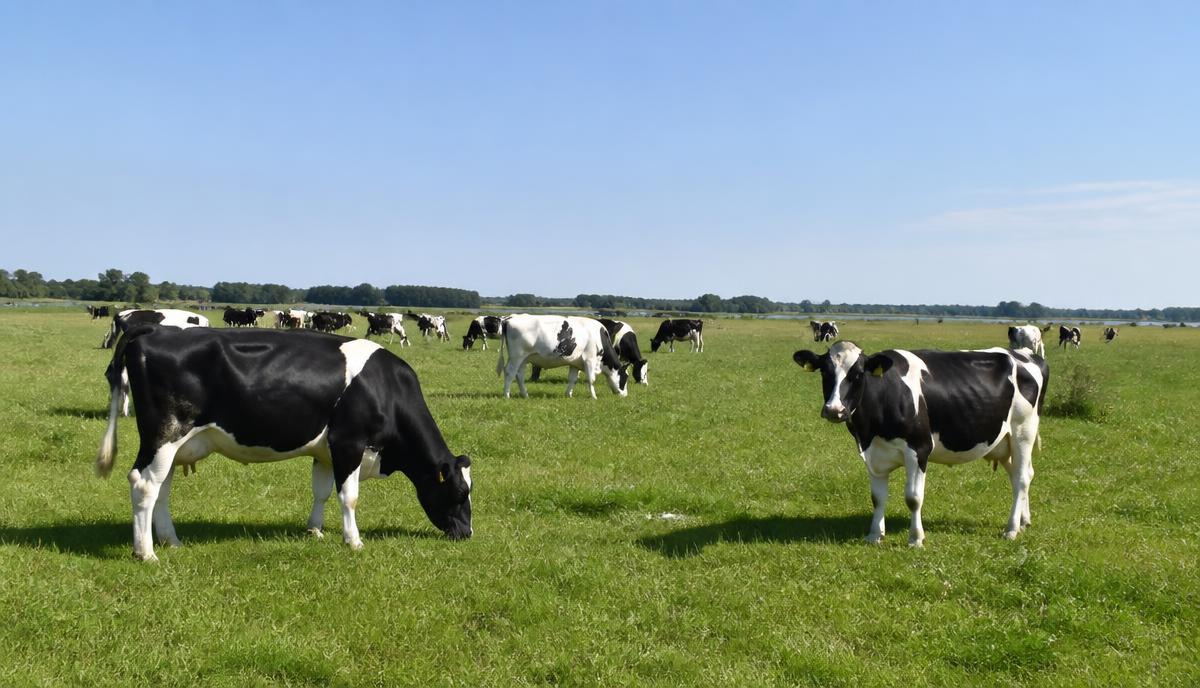
EU, UK, US, Canadian, New Zealand and Nordic frameworks diverge sharply on tethering, disbudding, cow-calf contact and pasture access. A practitioner's map of the current legal baseline.
Dairy welfare legislation varies more between jurisdictions than most other production standards, and the gaps are widening rather than narrowing. This is a practitioner-oriented map of where the legal baselines sit in 2026 and how they interact with private assurance schemes.
European Union
Council Directive 98/58/EC concerning the protection of animals kept for farming purposes remains the general EU floor. It is broad, principle-based and species-nonspecific — the operational detail comes from national implementations and from EFSA scientific opinions that inform Commission action (EFSA AHAW Panel, 2023, on the welfare of dairy cows). Concrete EU-level rules on stocking density, tethering or cow-calf contact for dairy cattle do not yet exist, though the pending revision of the animal-welfare acquis is expected to change several of these.
Sweden and Norway: the strictest national baselines
The Swedish Animal Welfare Act (Djurskyddslagen 2018:1192) and its implementing regulations require, among other things, mandatory summer grazing for dairy cows in most of the country (with regional variation), prohibit routine tethering in newly built barns, and mandate analgesia for disbudding. Norway's Animal Welfare Act (2009) is similarly strict, with an explicit ban on painful procedures without anaesthesia and a phase-out of tie-stalls.
United Kingdom
Post-Brexit, the UK retains the substance of the EU framework via the Animal Welfare Act 2006 and species-specific codes of practice. The Red Tractor and RSPCA Assured schemes carry most of the enforceable detail on dairy welfare in practice.
North America
- United States: no federal on-farm dairy welfare legislation. State-level rules are patchy; the primary drivers are the National Dairy FARM Program (industry-led) and processor-specific requirements.
- Canada: the dairy Code of Practice, developed under the National Farm Animal Care Council, is enforced through the Dairy Farmers of Canada proAction programme and is a condition of milk shipment.
- Both frameworks now require pain control for disbudding and dehorning, and both have moved to restrict long-term tie-stall housing in new construction.
New Zealand and Australia
New Zealand's Animal Welfare Act 1999 is operationalised through species-specific Codes of Welfare (Dairy Cattle Code, most recently revised 2019) with legal force under the Act. Australia relies on state-level implementation of the national Model Code of Practice, with variation between states.
Practical implication
For internationally-active dairy operators and consultants, the operational rule is that the private assurance scheme almost always sets a higher and more actionable standard than the local law — but the legal floor still matters, particularly around tethering, disbudding analgesia and pasture requirements where national law can be stricter than any voluntary scheme. Any welfare programme designed to travel across jurisdictions should be built to the strictest applicable requirement, not the local one.
- Council of the European Union. (1998). Council Directive 98/58/EC of 20 July 1998 concerning the protection of animals kept for farming purposes. Official Journal of the European Communities, L 221, 23–27.
- EFSA Panel on Animal Health and Welfare (AHAW). (2023). Scientific Opinion on the welfare of dairy cows. EFSA Journal, 21(5), e07993. https://doi.org/10.2903/j.efsa.2023.7993
- Swedish Ministry of Enterprise. (2018). Djurskyddslag (2018:1192) [Animal Welfare Act]. Svensk författningssamling.
- National Farm Animal Care Council. (2023). Code of Practice for the care and handling of dairy cattle. Ottawa: NFACC / Dairy Farmers of Canada.
- New Zealand National Animal Welfare Advisory Committee. (2019). Code of Welfare: Dairy Cattle. Wellington: Ministry for Primary Industries.