
Pain management for disbudding: the current standard of care
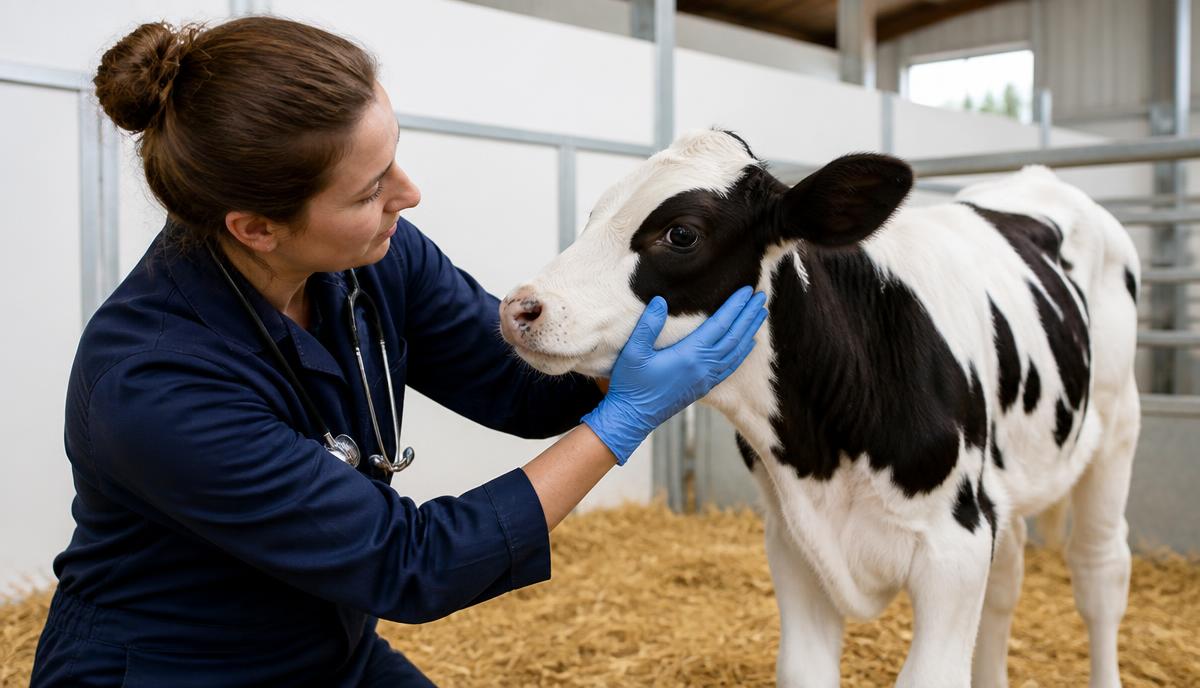
Cornual nerve block plus NSAID plus sedation is now the evidence-based baseline for calf disbudding. A summary of the drugs, timing and monitoring that make it work on-farm.
Disbudding is one of the most painful routine procedures performed on dairy calves, and it is now among the best-studied. The combination of a cornual nerve block (typically lidocaine or procaine), a systemic NSAID (meloxicam is the most-studied), and light sedation (xylazine) is the evidence-based standard of care and has been for close to a decade (Stafford & Mellor, 2011; Winder et al., 2018).
Why each drug is necessary
- Local block eliminates acute intra-procedural pain but wears off within 2–3 hours.
- NSAID addresses the inflammatory pain that dominates the 24–72 hour post-procedural window.
- Sedation reduces stress and improves handler safety and procedural precision.
- Removing any one of the three leaves a measurable welfare deficit in behavioural and physiological indicators.
Timing on-farm
Disbud early — ideally between three and six weeks of age, before horn buds attach to the skull. Administer sedation first, block the cornual nerve and wait five to ten minutes for onset, administer NSAID at the same visit, then disbud. Meloxicam's half-life covers the critical inflammatory window; a single dose is generally sufficient.
Monitor for 48 hours
Reduced lying time, reduced solid-feed intake and altered play behaviour are all documented in calves that receive inadequate analgesia. A simple 48-hour behavioural check by the calf-rearer catches most cases where the protocol failed — usually because the block was misplaced or the NSAID dose was inadequate for the calf's body weight.
- Stafford, K. J., & Mellor, D. J. (2011). Addressing the pain associated with disbudding and dehorning in cattle. Applied Animal Behaviour Science, 135(3), 226–231. https://doi.org/10.1016/j.applanim.2011.10.018
- Winder, C. B., Miltenburg, C. L., Sargeant, J. M., LeBlanc, S. J., Haley, D. B., Lissemore, K. D., Godkin, M. A., & Duffield, T. F. (2018). Effects of local anesthetic or systemic analgesia on pain associated with cautery disbudding in calves: A systematic review and meta-analysis. Journal of Dairy Science, 101(6), 5411–5427. https://doi.org/10.3168/jds.2017-14092
- Adcock, S. J. J., & Tucker, C. B. (2018). The effect of disbudding age on healing and pain sensitivity in dairy calves. Journal of Dairy Science, 101(11), 10361–10373. https://doi.org/10.3168/jds.2018-14987
- Mirra, A., Spadavecchia, C., Bruckmaier, R., Gutzwiller, A., & Casoni, D. (2018). Acute pain and peripheral sensitization following cautery disbudding in 1- and 4-week-old calves. Physiology & Behavior, 184, 248–260. https://doi.org/10.1016/j.physbeh.2017.11.031
- Reedman, C. N., Duffield, T. F., DeVries, T. J., Lissemore, K. D., & Winder, C. B. (2022). Randomized controlled trial assessing the efficacy of pain control strategies for caustic paste disbudding in dairy calves. Journal of Dairy Science, 105(2), 1719–1734. https://doi.org/10.3168/jds.2021-21125